How to Practise Garbh Sanskar While Working Full-Time: Morning, Workday and Bedtime Routine
December 05, 2025
Verified by: Prof. Jayshree Upadhyay | Updated on: December 05, 2025


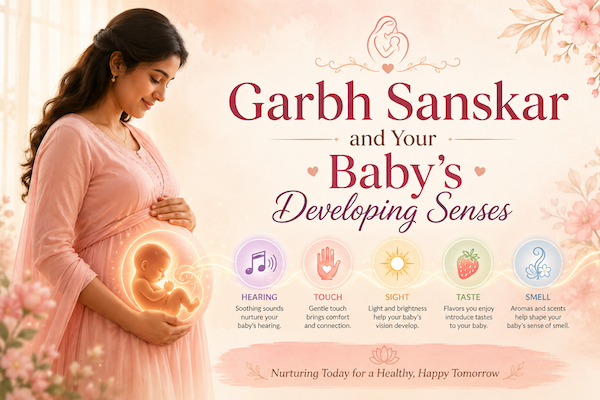

Your baby’s brain begins forming just weeks after conception. What you eat, how you eat, and the emotional state in which you eat—all profoundly influence fetal brain development. This guide blends Garbh Sanskar wisdom with modern neuroscience to help expecting mothers shape a healthy, intelligent, emotionally balanced baby.
From the moment you conceive, your baby relies on you for every nutrient needed to build their brain. In the first 1,001 days (conception to age two), nearly 80% of brain development occurs.
Garbh Sanskar teaches: “Ahara (food) is not just nourishment—it is emotional, physical, and spiritual input for the baby.”
Modern science echoes this. Nutrients like DHA, folate, iron, choline, and antioxidants directly support neuron formation, memory pathways, and brain structure.
Your daily diet becomes your baby’s daily brain food.
Garbh Sanskar emphasizes (Garbh Sanskar rituals) a sattvic diet—pure, fresh, natural foods that calm the mind and energize the body.
Ayurveda teaches (Ayurvedic pregnancy guidance) that food carries prana (life force). When mothers eat mindfully with love and gratitude, it creates a positive emotional imprint in the womb.
Your diet directly shapes:
Scientific studies consistently show that mothers who consume balanced, nutrient-rich diets tend to have babies with higher cognitive scores and healthier birth weights.
Focus on:
Ayurveda recommends:
Focus on:
This trimester is ideal for adding medicated milk (Ayurvedic herbal milk) as advised by experts.
Focus on:
This trimester also shapes emotional stability. Eat in a peaceful environment.
These foods are commonly recommended during Garbh Sanskar classes.
Avoid:
Such foods can affect mood, digestion, and fetal growth.
Early Morning: Warm water + soaked almonds
Breakfast: Vegetable poha / dal chilla + fruit
Mid-Morning: Tender coconut water or buttermilk
Lunch: Rice, ghee, dal, sabzi, salad, chapati
Evening Snack: Fruit bowl or nuts
Dinner: Light khichdi or roti-sabzi
Bedtime: Warm turmeric milk
A calm, well-nourished mother → balanced cortisol → stable baby.
A stressed, undernourished mother → fluctuating hormones → reactive newborn.
Ayurveda teaches that the child absorbs not just food nutrients but the energy with which food is eaten.
The father’s involvement reduces maternal stress, improving nutrient absorption and fetal health.
What foods help in fetal brain development during pregnancy?
Foods rich in DHA, folate, choline, iron, and high-quality proteins support neuron formation and cognitive development.
Does what the mother eats affect the baby’s intelligence?
Yes. Nutrients consumed during pregnancy directly influence neural tube formation, synaptic connections, and memory pathways.
How does stress while eating impact the unborn baby?
Stress elevates cortisol, which can affect fetal emotional regulation. Ayurveda emphasizes that food carries emotional energy.
Can a father contribute to pregnancy nutrition?
Yes, fathers help by preparing meals, reducing stress, and encouraging healthy habits.
Are Ayurvedic foods safe during pregnancy?
Many are safe, like ghee, almonds, and coconut. Herbal supplements should be doctor-advised.
What foods should pregnant women avoid?
Processed foods, excess caffeine, too much sugar, raw papaya, raw pineapple, leftovers.
How early does the baby’s brain begin forming?
Neural tube forms by week 4. Brain development accelerates through all trimesters.
Can nutrition influence the baby’s temperament?
Yes. Balanced nutrition supports stable hormones → calmer babies.
Is a sattvic diet necessary for Garbh Sanskar?
A sattvic diet supports mental clarity, emotional balance, and fetal nourishment.
Nutrition is the first classroom for your baby’s brain. Every meal, every sip, every mindful choice contributes to the architecture of your child’s intelligence, emotional balance, and overall health.
With Garbh Sanskar Guru’s guidance, food becomes more than calories—it becomes sanskar.